
Future of Work, 3 Powerful Shifts Reshaping HR in the Age of AI

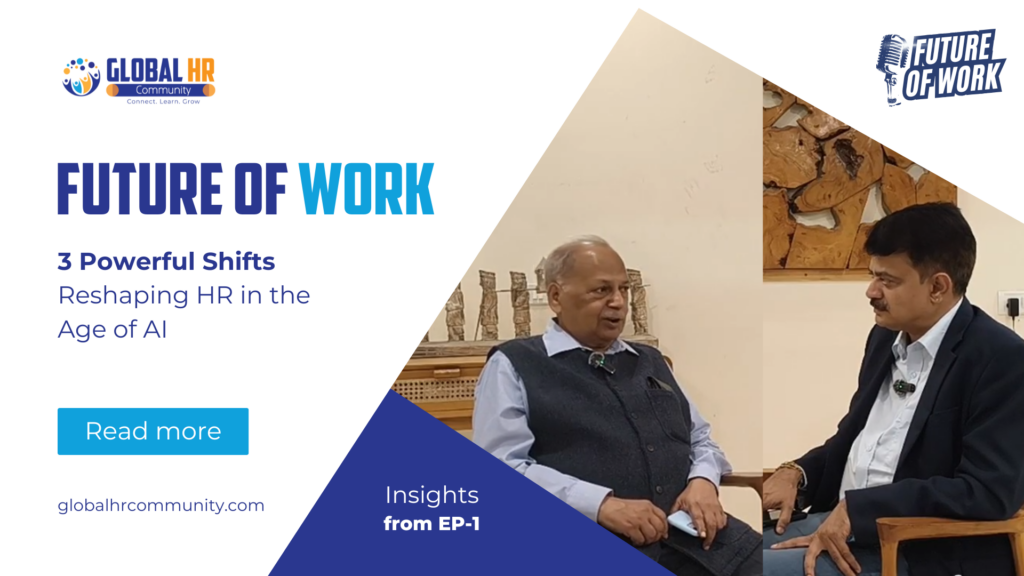
Future of Work is undergoing a massive evolution, moving from intuition-led HR to data-driven decision science and AI-powered workplaces. Explore the 3 powerful shifts shaping how work, workers, and workplaces are being redefined.
Future of Work, A New Era of HR Begins
The Future of Work is not a distant idea anymore. It is here, unfolding in front of us, and reshaping the foundations of Human Resources.
In a recent conversation between industry legend Dr. T. V. Rao and host Sreekanth, the discussion traced HR’s journey from the welfare-driven era of the 1950s to an AI-powered fourth industrial revolution.
But this shift is not just technological. It is philosophical.
It is changing how we define work, how we make decisions, and where we derive wisdom for the future.
Below are the three powerful pillars of transformation highlighted in the session.
1. Redefining the W’s of Work
The first disruption lies in redefining the very vocabulary of employment.
What we once called Work, Worker, and Workplace no longer means the same thing in the Future of Work.
The Work
Work has become fluid.
AI is transforming deliverables across the board, from engineering roles to top leadership decisions.
Nothing about work is static anymore, and adaptability has become a core skill.
The Worker
The definition of a “worker” has expanded.
Today’s workforce includes permanent talent, freelancers, gig workers, robots, and even agentic AI systems that perform tasks intelligently alongside humans.
The Workplace
The idea of a single office location is obsolete.
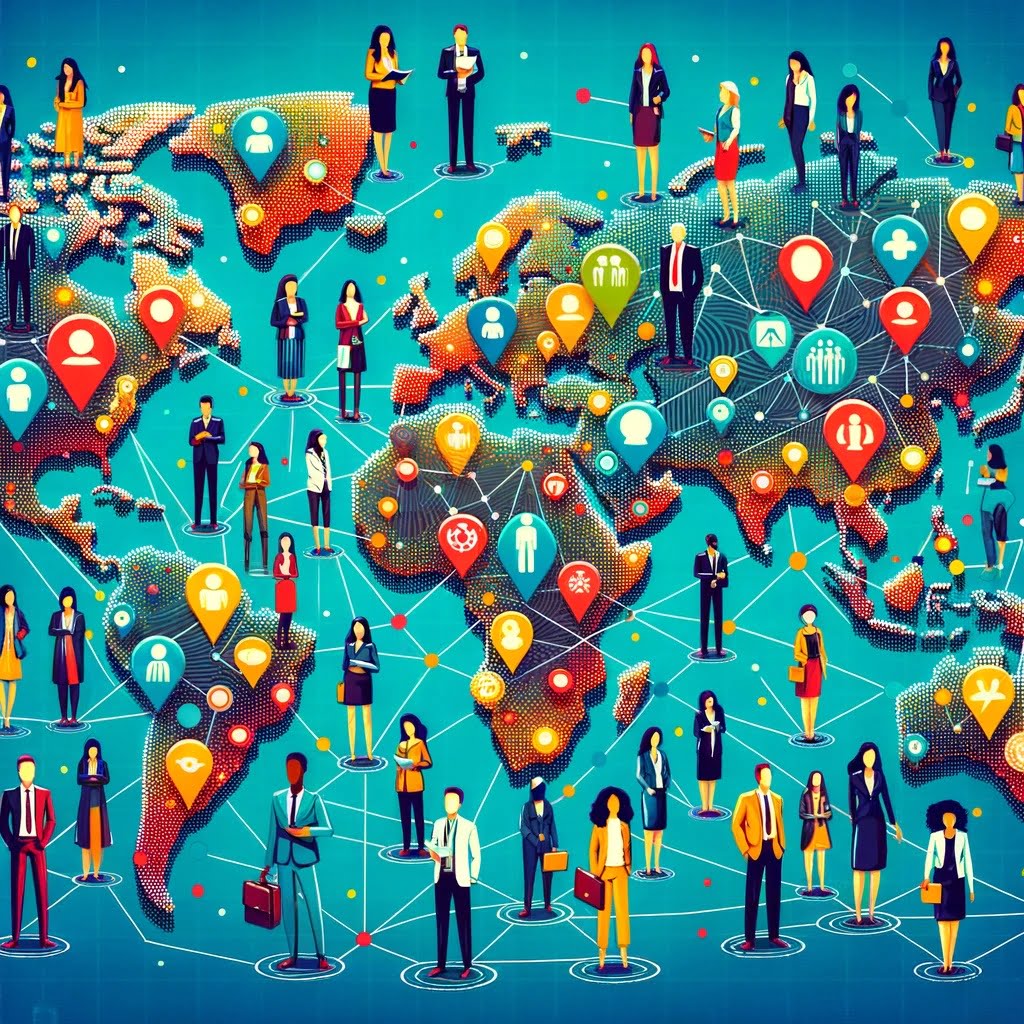
Workplaces are now distributed, digital, borderless, and global.
Work-Life Balance → Work-Life Integration
Perhaps the most inspirational shift is the movement from balance to integration.
Balance suggests a trade-off, but integration creates a flywheel effect: work energises life, and life energises work.
Echoing Gandhian philosophy, Dr. Rao emphasises that when work becomes purpose-driven, the artificial divide between living and working disappears, creating more joy and productivity.
2. How AI Is Turning HR Into a Decision Science
For decades, HR decisions—hiring, firing, promotions—were built on intuition.
Intuition can be powerful, but it is also biased and difficult to correct.
AI now enables HR to evolve into a science of decisions, not a guesswork discipline.
Decoding Bias and Patterns
AI can analyse years of decisions, detect patterns, and reveal hidden biases that humans overlook.
Unlike intuition, algorithms learn from mistakes.
Making Intangibles Tangible
Culture, leadership potential, empathy, engagement, behaviour—these were all “soft” and difficult to measure.
Today, through video analytics, sentiment analysis, and behavioural modelling, AI converts these into tangible insights.
Beware of “Intelligent Garbage”
Dr. Rao offers an essential warning.
AI is only as good as the data we give it.
If outdated psychological models or poor-quality inputs are used, AI will produce “intelligent garbage,” not wisdom.
The Future of Work demands HR professionals who can research deeply, curate better data, and improve the quality of inputs to build reliable decision systems.
3. Digitising Analog Wisdom to Build HR Super Intelligence
AI today shows general intelligence, but not yet the “super intelligence” needed for HR.
Why?
Because the wisdom needed to train it is still missing.
A huge portion of leadership knowledge—especially from Indian work cultures, veterans, elders, and history—still lives in analog form:
conversations, experiences, memories, physical books.
The Data Gap
AI datasets are largely Western.
Indian case studies, leadership practices, and cultural wisdom remain underrepresented, resulting in incomplete intelligence.
The Moonshot Opportunity
The biggest breakthrough lies in digitising this analog knowledge:
- capturing stories of industry veterans
- documenting Indian leadership case studies
- building large datasets reflecting diverse work cultures
- feeding AI with “Indian mind” insights
This could help create Super Intelligence in HR, revolutionising how the world understands potential, talent, and leadership.
The Future of Work will not be built only on technology.
It will be built on digitised human wisdom.
Conclusion, The Future of Work Belongs to the Human-AI Partnership
As Dr. Rao and Sreekanth emphasised, we are entering a future shaped by three forces:
the redefinition of work, scientific decision-making, and the rise of digitised human wisdom.
The Future of Work is not about replacing humans with algorithms,
it is about elevating humans through better tools, better insights, and better understanding.
Leaders and HR professionals who embrace these shifts will build organisations that are more adaptive, more empathetic, and more future-ready.
If this conversation inspired you, share it with someone who cares about the future of HR.
And tell us—what part of this shift excites you the most?
Follow us on LinkedIn:
https://www.linkedin.com/company/global-hr-community
Liked what you read? Here’s one more: The Modern AI Vocabulary






Responses