
AI & Gen Z: The Rise of Artificial Intelligence Among the Digital-Native Generation

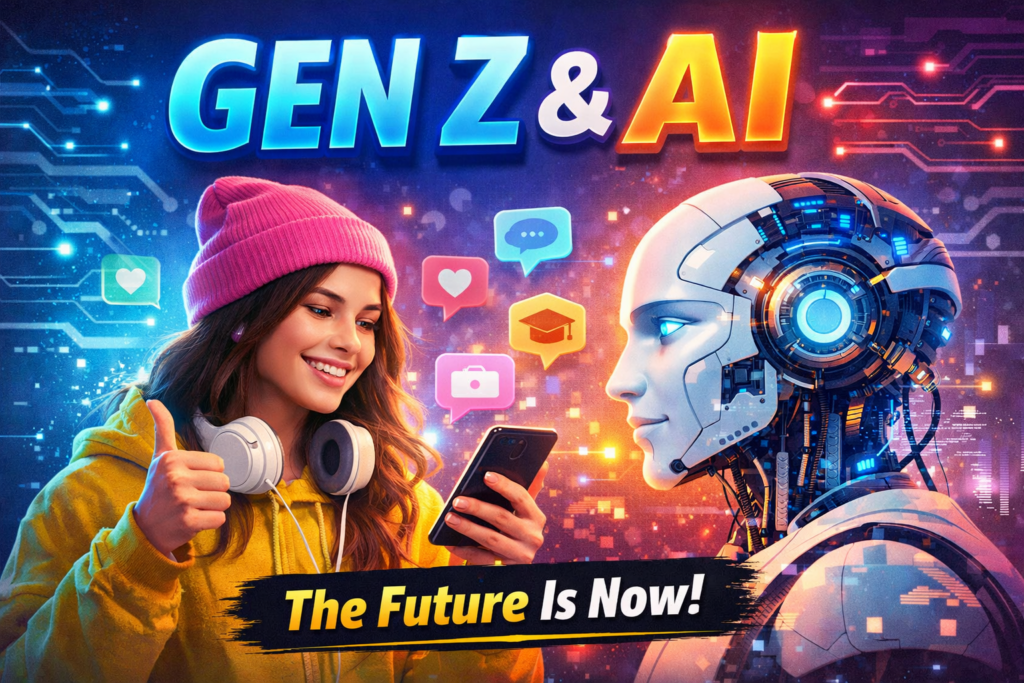
Artificial Intelligence is no longer a futuristic concept – it has rapidly become part of everyday life, especially for Generation Z. Born roughly between the late 1990s and early 2010s, Gen Z grew up in a digital ecosystem and is now leading the adoption of AI tools for learning, work, creativity, and even personal interactions. The popularity of AI among this generation is not just a trend; it signals a transformation in how technology integrates into daily living.
1. AI Is Becoming a Daily Companion
Gen Z is one of the fastest adopters of AI globally. Studies suggest around 60% of Gen Z already use AI tools like ChatGPT in everyday life, often without overthinking their usage — they treat AI as a natural extension of digital tools.
Recent research also indicates that about 70% of Gen Z use generative AI weekly, showing how deeply AI has penetrated routine tasks.
This shift reflects a broader mindset: for Gen Z, AI is not disruptive technology — it is simply infrastructure.
2. Academic and Learning Transformation
AI is dramatically reshaping education for Gen Z. Teen usage of AI tools for schoolwork has increased significantly, with about a quarter of teens using AI for homework, roughly double the rate from just two years earlier.
Beyond assignments, AI is helping students:
- Summarize complex concepts
- Generate study notes
- Improve writing and research
- Learn coding or technical skills
However, this convenience also sparks debates around originality, academic integrity, and dependency.
3. Workplace and Career Integration
Gen Z is entering the workforce at a time when AI adoption is accelerating. Surveys show over half of Gen Z employees already use generative AI in day-to-day work, and many expect it to reshape their jobs soon.
AI is particularly popular for:
- Content creation and communication
- Data analysis and research
- Productivity automation
- Skill development
Interestingly, while adoption is high, many Gen Z workers also worry about job displacement — highlighting both optimism and caution.
4. AI Beyond Productivity: Lifestyle & Relationships
AI’s role among Gen Z extends beyond work and academics.
Recent reports show:
- Many Gen Z individuals use AI to craft dating messages or communication.
- A significant number rely on AI chatbots for emotional support or mental-health guidance due to accessibility and affordability.
- Some even prefer AI tools over social media for productivity and problem-solving.
This suggests AI is becoming a companion technology, not just a utility.
5. Information Consumption & Decision-Making
AI is influencing how Gen Z consumes information. Reports indicate over 80% of Gen Z consumers use generative AI to interpret news and information, highlighting its growing role in knowledge filtering.
Additionally, many young adults use AI for:
- Financial planning
- Career guidance
- Learning new skills
- Making lifestyle decisions
This trend positions AI as a trusted advisor rather than just a search tool.
6. Skepticism and Ethical Awareness
Despite strong adoption, Gen Z is not blindly optimistic. Some surveys reveal a notable portion believe AI may be overhyped or risky.
Key concerns include:
- Privacy and misinformation
- Job security
- Over-reliance on automation
- Ethical implications
This balanced perspective may shape more responsible AI usage in the future.
Conclusion: A Generation Shaping the AI Era
AI’s popularity among Gen Z is not just about convenience — it reflects a generational shift in how technology is perceived and used. For this generation, AI is:
- A productivity enhancer
- A learning partner
- A creative collaborator
- A decision-support system
- Sometimes even a social companion
As AI continues to evolve, Gen Z will likely remain at the forefront, influencing how artificial intelligence is developed, adopted, and integrated into society.
The real question is not whether Gen Z will use AI — but how they will redefine its role in everyday human life.







Responses