
Essential Tools Every Manager Should Know in 2026

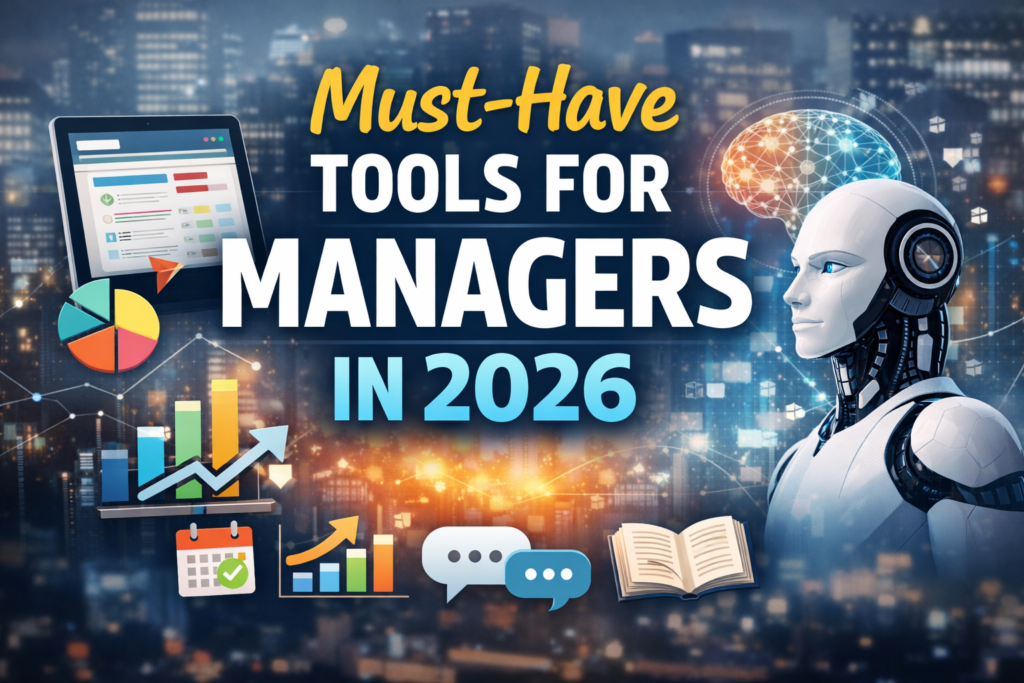
A Practical Guide to Smarter Leadership, Productivity, and Team Success
Managing teams today goes far beyond assigning tasks and reviewing performance. Modern managers juggle collaboration, productivity, employee engagement, data-driven decisions, and increasingly, AI-powered workflows. The right digital tools can make this balancing act far more efficient while improving both team output and employee experience.
Here’s a practical overview of some of the most valuable tools available for managers today, categorized by their primary function.
Project & Task Management Tools
Effective project management is the backbone of team productivity. Tools in this category help managers plan, track, and deliver projects smoothly.
Platforms like Asana, Trello, Monday.com, ClickUp, and Wrike enable managers to organize workflows, assign responsibilities, monitor progress, and maintain transparency across teams. These tools reduce confusion around deadlines, improve accountability, and ensure everyone stays aligned with organizational goals.
Communication & Collaboration Tools
Strong communication is essential for successful teams, especially with remote and hybrid work becoming the norm.
Tools such as Slack, Microsoft Teams, Zoom, Google Workspace, and Notion help streamline communication, facilitate meetings, share documents, and maintain collaborative knowledge hubs. They enable faster decision-making, reduce email overload, and foster real-time teamwork across locations.
Performance & HR Management Tools
Managers play a key role in employee development, engagement, and performance evaluation.
Solutions like Lattice, 15Five, Culture Amp, BambooHR, and Workday help track employee performance, gather feedback, manage HR data, and analyze engagement levels. These tools support structured performance conversations, employee growth, and data-informed people management strategies.
Productivity & Time Management Tools
Time management is critical not only for managers themselves but also for their teams.
Applications such as RescueTime, Clockify, Todoist, Motion, and Evernote assist in tracking work hours, organizing priorities, automating schedules, and capturing important information. They help managers optimize productivity while reducing burnout and inefficiencies.
Analytics & Decision-Making Tools
Modern leadership increasingly depends on data-driven insights rather than intuition alone.
Tools like Tableau, Power BI, Google Analytics, and Looker Studio help managers transform raw data into visual dashboards and actionable insights. These platforms support better strategic planning, performance tracking, and informed decision-making.
AI Tools Supporting Managers
Artificial intelligence is rapidly becoming a managerial assistant rather than just a technical innovation.
AI-powered platforms can assist with writing, meeting summaries, content creation, brainstorming, and decision support. These tools help managers save time, enhance communication clarity, and focus more on strategic leadership rather than routine administrative tasks.
Learning & Development Platforms
Continuous learning is essential for both managers and their teams.
Platforms such as LinkedIn Learning, Coursera, Udemy Business, and Degreed provide access to leadership training, technical skills development, and professional certifications. Investing in learning fosters innovation, adaptability, and employee retention.
Final Thoughts
The role of managers is evolving from task supervisors to strategic leaders, coaches, and culture builders. Leveraging the right tools not only improves efficiency but also enhances employee engagement, decision-making quality, and overall organizational success.
The key is not adopting every available tool, but selecting those that align with your team’s needs, workflow, and long-term objectives. When used thoughtfully, these tools can empower managers to lead smarter, communicate better, and build stronger teams in an increasingly digital workplace.








Responses