
Gen Z and Career Minimalism: Rethinking Ambition in the Modern Workplace

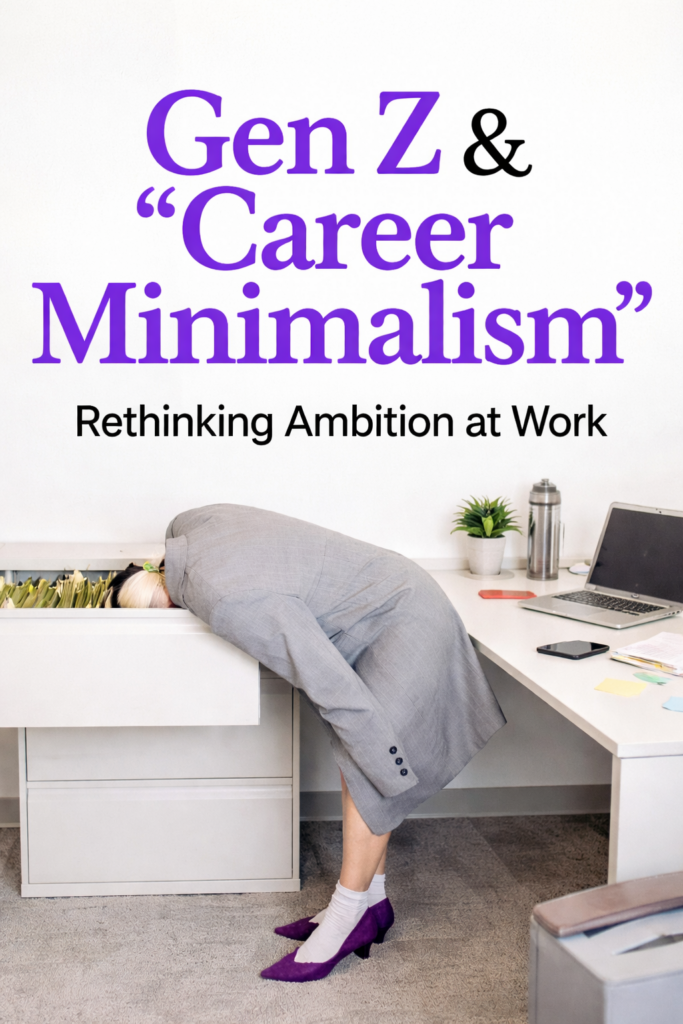
The corporate definition of success is changing. For decades, ambition meant climbing the corporate ladder quickly, working long hours, and prioritizing job titles over personal well-being. Today, a growing number of Gen Z professionals are challenging that narrative through what experts call career minimalism — an intentional approach that values balance, purpose, and flexibility over traditional markers of success.
What Is Career Minimalism?
Career minimalism focuses on stability, autonomy, and well-being rather than constant promotions or status-driven achievements. Instead of chasing titles, many young professionals seek roles aligned with personal values, mental health, and quality of life. Research suggests this approach reflects a broader shift away from “hustle culture” toward sustainable careers.
Why Gen Z Is Driving This Shift
1. Work-life balance is a top priority
Recent workforce surveys show Gen Z places greater emphasis on balance than hierarchical advancement. In fact, only a small proportion cite leadership positions as their primary career goal, highlighting a move away from traditional ambition models.
2. Flexibility matters more than salary alone
A 2025 LinkedIn survey indicated that about 40% of Gen Z workers would accept lower pay for remote or hybrid work options, demonstrating how autonomy increasingly outweighs compensation alone.
3. Mental health and burnout awareness
Studies link workplace disengagement trends like “quiet quitting” to burnout rather than laziness, suggesting employees are setting healthier boundaries to protect well-being.
4. Economic uncertainty and side hustles
Economic shifts and job market volatility have led many Gen Z professionals to diversify income streams. Some surveys show more than half of young workers maintain side hustles for financial security and personal fulfillment.
The Emerging Workplace Trends
Several modern workplace behaviors reflect this minimalist mindset:
- Quiet quitting: Doing defined job responsibilities without overextending, emphasizing boundaries and balance.
- Micro-retirement: Taking intentional career breaks for mental health, travel, or skill development.
- Job fluidity: Frequent job changes early in careers are increasingly seen as exploration rather than instability.
- Preference for hybrid work: Only a minority of Gen Z prefers full-time office work, reflecting new expectations around flexibility.
Is Career Minimalism a Positive Shift?
Potential advantages:
- Reduced burnout and better mental health
- Increased job satisfaction and retention
- Stronger focus on meaningful work
- More sustainable career growth
Possible concerns:
- Slower traditional career progression
- Reduced exposure to leadership opportunities
- Misinterpretation as lack of ambition
Experts suggest the key lies in balance: minimalism doesn’t mean disengagement — it means intentional career choices.
What Organizations Need to Adapt
Companies aiming to attract Gen Z talent should consider:
- Flexible work arrangements
- Purpose-driven roles
- Transparent career growth paths
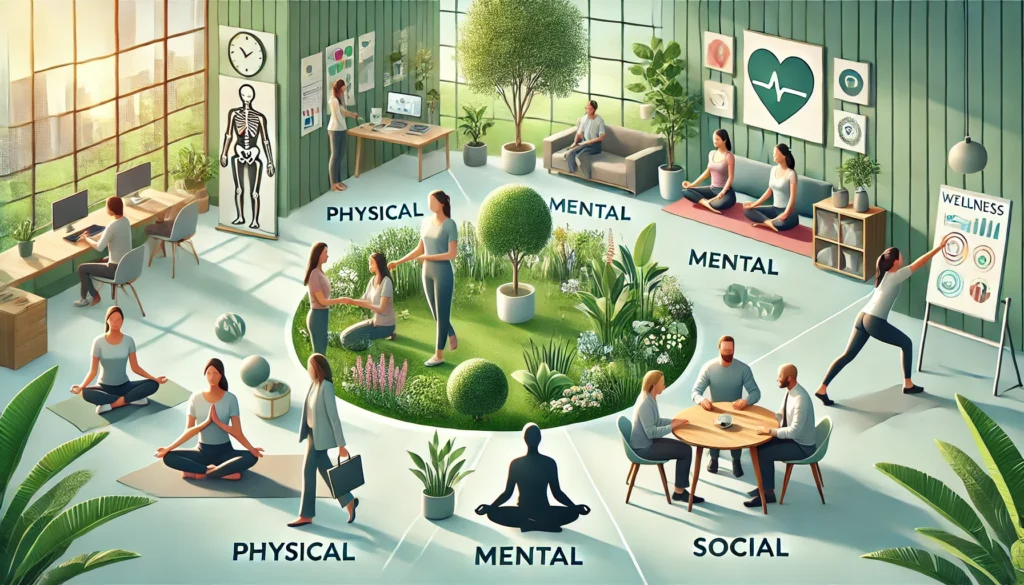
- Mental health support initiatives
- Continuous learning opportunities
Research consistently shows that organizations prioritizing flexibility and employee well-being experience higher engagement and loyalty.
Final Thoughts
Career minimalism is less about lowering ambition and more about redefining it. Gen Z is not rejecting success; they are redefining what success looks like — one that includes well-being, autonomy, and purpose alongside professional achievement.
As workplaces evolve, this shift may ultimately benefit both employees and organizations by promoting healthier, more sustainable approaches to work.







Responses