
Mantrika: Solving HR’s Architecture Problem to Unlock Workforce Capital Intelligence


Organizations today do not lack workforce data. They store vast volumes of it across HR systems, performance platforms, finance tools, and talent applications. Yet despite this abundance, most enterprises still struggle to answer the workforce questions that matter at the board level.
The challenge is not data availability it is architecture.
This is the problem Mantrika is addressing. Rather than treating HR analytics as a reporting or AI modeling challenge, Mantrika approaches it as a structural design problem: how workforce data is organized, connected, and aligned to business value.
The Questions Leaders Cannot Reliably Answer
Across industries, executive teams are increasingly asking workforce questions that directly impact growth, risk, and profitability:
- Which roles generate the highest profit per employee?
- Where is leadership risk emerging?
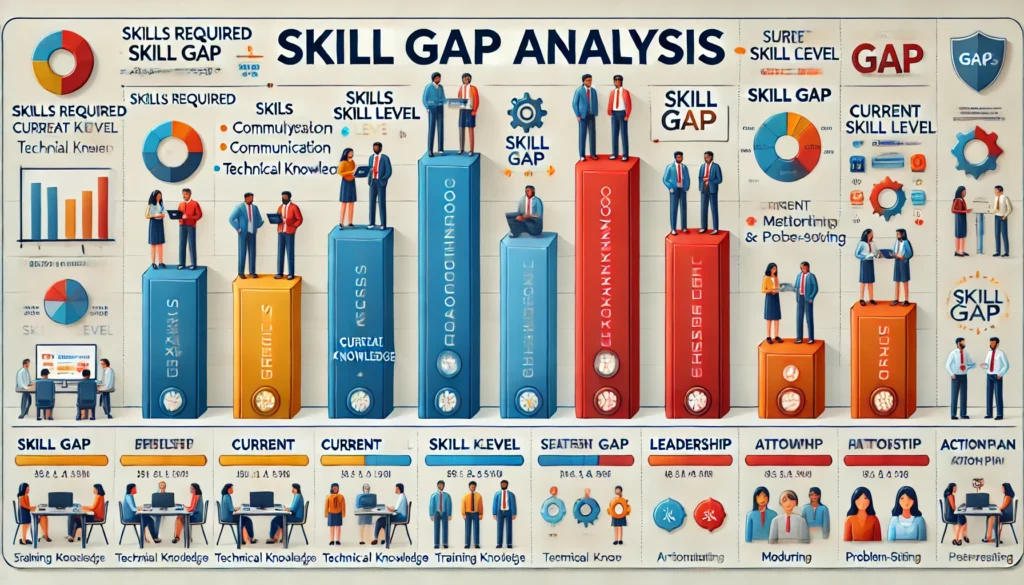
- Which skill gaps will constrain growth next year?
Most organizations can report revenue per employee. Very few can identify which specific roles, skills, or team structures are driving or eroding that performance.
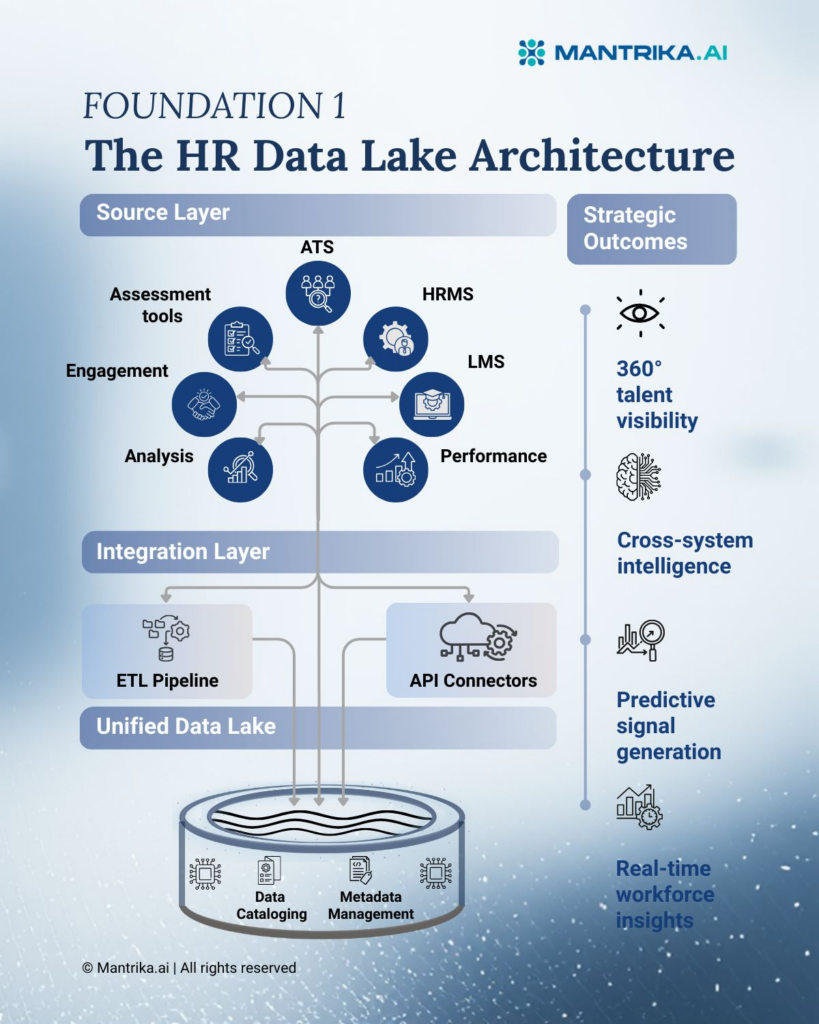
The reason is systemic. Workforce data typically sits fragmented across multiple disconnected systems: HRIS, learning platforms, performance tools, project systems, and finance databases. Without structural integration, relationships between people, work, skills, and outcomes remain invisible.
Why AI on Fragmented Data Fails
Many enterprises attempt to solve this gap by layering AI or analytics tools on top of existing systems. But when underlying architecture is fragmented, AI can only automate existing silos—it cannot generate enterprise-grade insight.
In such environments, organizations gain dashboards and reports, but not predictive clarity. Automation improves efficiency, but not strategic advantage.
Mantrika’s perspective is clear: predictive workforce intelligence is impossible without structural coherence.
Designing the Workforce Data Layer First
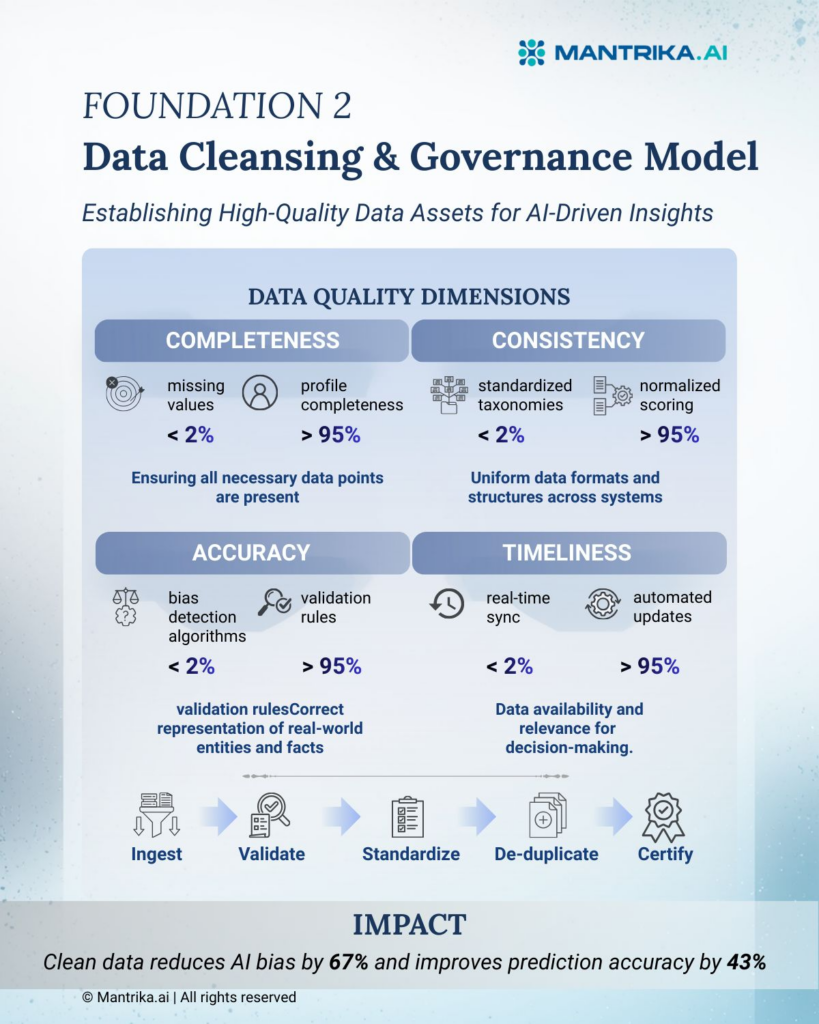
Mantrika’s approach begins not with models, but with architecture. The company designs a unified workforce data layer that connects talent activity directly to business outcomes.
This structural foundation includes:
- Unified cross-system workforce architecture
- Governed and standardized skill ontology
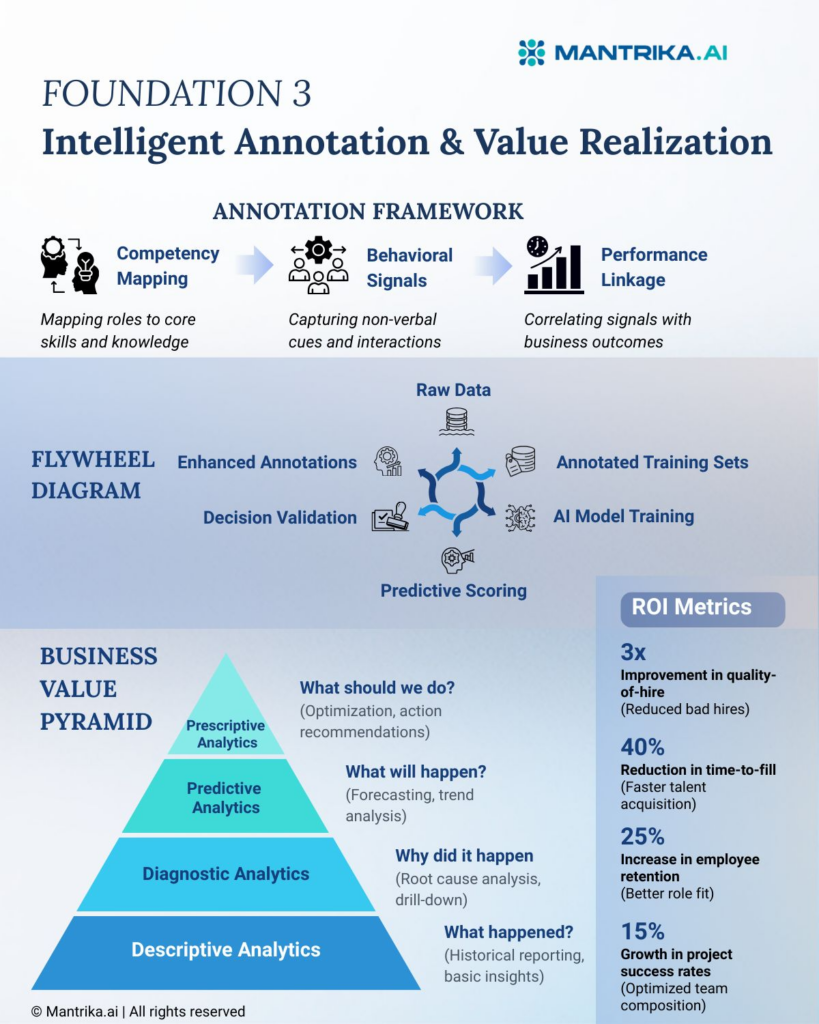
- Direct linkage between work performed and business value created
By establishing these relationships at the data layer, organizations gain the ability to analyze workforce contribution with precision and consistency across the enterprise.
From HR Analytics to Workforce Capital Intelligence
Once workforce architecture is unified, predictive modeling becomes meaningful. Organizations can move beyond descriptive HR metrics into enterprise-grade intelligence about workforce value, risk, and growth capacity.
This shift marks a transition from traditional HR analytics to what Mantrika defines as Workforce Capital Intelligence—a discipline that treats talent as measurable, optimizable enterprise capital rather than administrative data.
With this lens, leaders can understand:
- Which roles and skills drive profitability
- Where capability gaps threaten strategy
- How workforce structure impacts performance
- Where leadership risk is emerging
- How talent investment translates to enterprise value
Converting Talent Data into Enterprise Value
In an era where workforce capability determines competitive advantage, organizations need more than analytics dashboards. They need structural clarity on how people create value.
Mantrika’s architecture-first approach enables enterprises to convert fragmented talent data into coherent, predictive intelligence aligned with business outcomes.
Because the real constraint in HR is not data scarcity—it is architectural fragmentation.
And solving that is what turns workforce information into enterprise value.





Responses