
-

Summary of Joerg Storm’s Newsletter: “Why Claude Code Changes More Than Software Development”
This edition of Joerg Storm’s Digital Storm Weekly focuses on a major shift happening in AI: moving from AI tools that simply generate answers to AI systems that actively perform work and manage operations. The newsletter highlights how tools like Claude Code and ChatGPT Ads Manager are reshaping software, workflows, and business infrastructure.
Key Highlights
1. Claude Code Is More Than a Coding Tool
Storm argues that Claude Code is being misunderstood because of its name. It is not just for developers — it behaves more like:
-
an AI operating system
-
an AI chief of staff
-
a workflow automation assistant
-
a local AI agent that interacts directly with files and systems
Unlike browser chatbots, Claude Code can:
-
organize folders
-
automate repetitive tasks
-
process large files
-
manage workflows
-
maintain local context
-
chain multiple actions together
The newsletter frames this as the transition from:
“AI that answers questions” → “AI that performs work.”
2. Real-World Non-Technical Use Cases
The newsletter shares several practical ways non-technical users are already using Claude Code, including:
-
cleaning computer storage
-
organizing folders automatically
-
improving screenshot quality
-
extracting images from documents
-
downloading and summarizing YouTube videos
-
selecting giveaway winners from spreadsheets
-
identifying potential customers for businesses
The broader point is that users no longer need technical expertise — they just need to think in workflows instead of prompts.
3. AI Is Becoming Business Infrastructure
Another major theme is that AI is no longer just a productivity enhancer. It is evolving into the operational layer of businesses.
Storm highlights:
-
autonomous AI agents
-
AI-native operating systems
-
enterprise workflow automation
-
AI decision-making systems
The newsletter states that the future winners will not simply have AI access — they will execute faster with AI while maintaining governance and operational control.
4. OpenAI Advertising Changes the Internet Economy
The newsletter also covers the launch of OpenAI’s Ads Manager, describing it as the beginning of a “third major intent ecosystem” after:
-
Google Search
-
Meta’s social graph
-
conversational AI advertising
Key insight:
-
Google reveals keywords
-
ChatGPT reveals decisions in progress
This changes advertising from targeting search keywords to targeting conversational intent.
5. AI in Enterprises Requires Organizational Change
A featured podcast section emphasizes that most AI projects fail not because of weak models, but because organizations fail to adapt operationally.
Main takeaways:
-
AI is a systems problem, not just a model problem
-
governance and workflows matter more than tools
-
executives must actively participate
-
organizational silos block AI scaling
-
culture and workforce adoption are critical
6. Recommended AI Stack
Storm recommends combining tools such as:
to create AI-native workflows and productivity systems.
Central Takeaway
The core message of the newsletter is:
The future is AI systems that operate autonomously, manage workflows, reduce operational friction, and act as execution layers inside businesses.
The future of AI is not better chatbots.
Storm believes this shift will redefine:
-
software development
-
enterprise operations
-
digital advertising
-
workforce structures
-
competitive advantage in business
The newsletter positions AI agents like Claude Code as early examples of this next wave of AI-native operating systems.
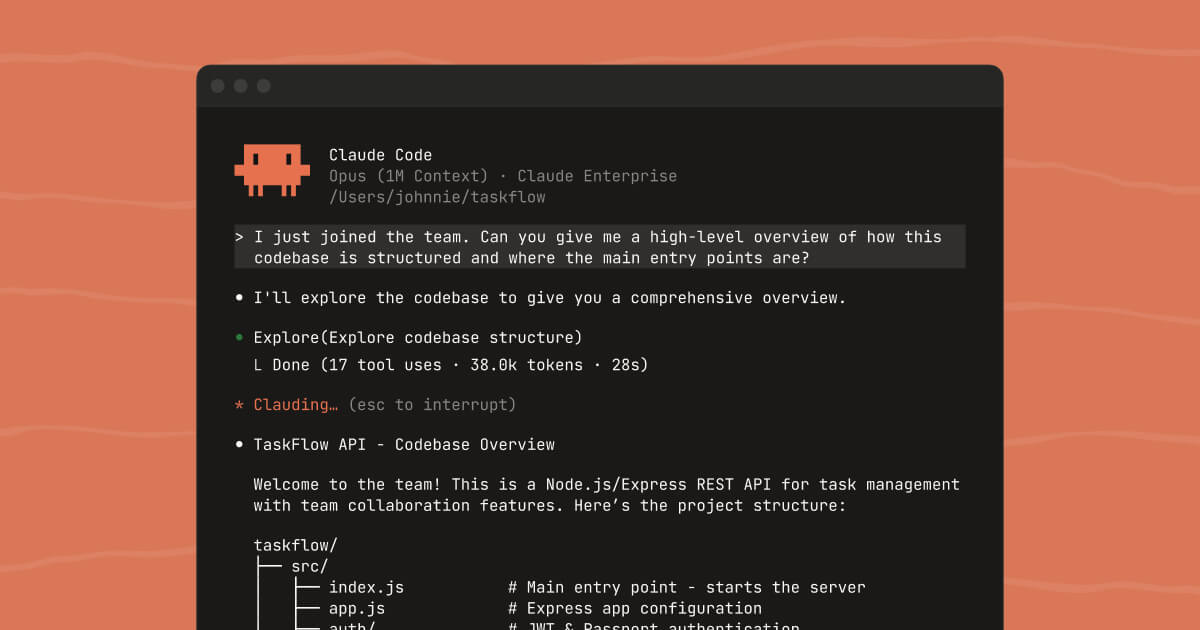
anthropic.com
Claude Code by Anthropic | AI Coding Agent, Terminal, IDE
Anthropic's agentic coding tool for developers. Claude Code understands your codebase, edits files, runs commands, and helps you ship faster.
-