
The Reality of AI and Jobs: What the Data Actually Shows

For the past few years, discussions around artificial intelligence have often been dominated by one dramatic narrative: AI will replace millions of jobs. From office clerks to analysts and even data scientists, many predicted that automation would rapidly eliminate large sections of the workforce.
But when we move away from speculation and look at actual labor market data, a different picture begins to emerge.
The Data Tells a Different Story
A recent analysis by Vanguard examined approximately 140 occupations that are considered highly exposed to artificial intelligence. These roles include positions such as office clerks, HR assistants, legal clerks, typists, and data scientists—jobs frequently cited as being at high risk of automation.
Instead of showing a decline, the findings reveal something unexpected.
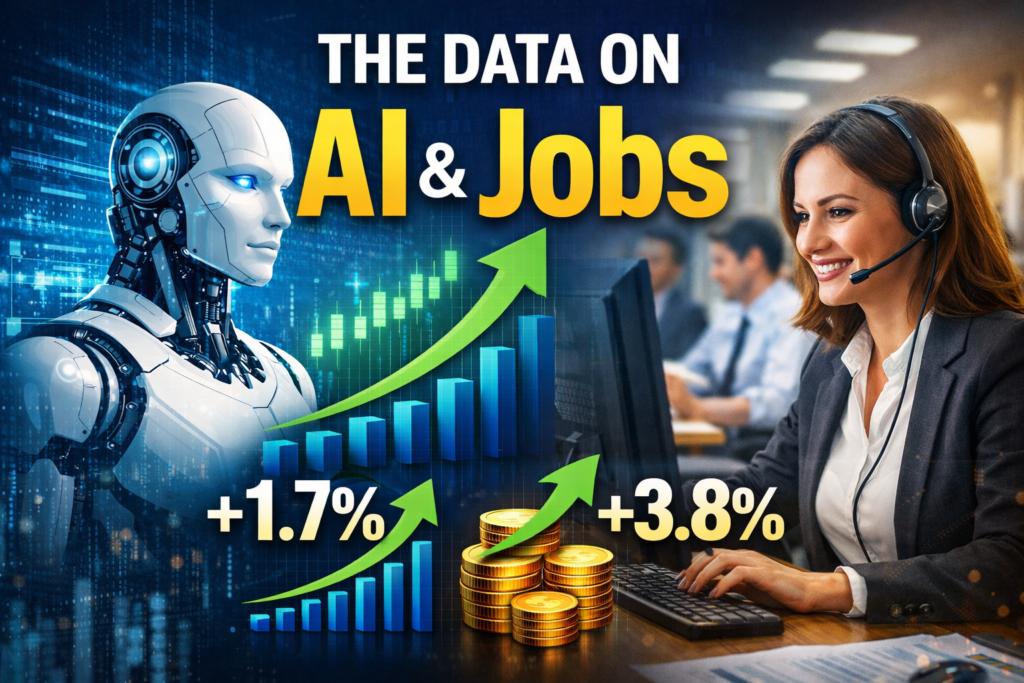
Between 2023 and 2025, jobs with high exposure to AI grew at an annual rate of 1.7 percent. In contrast, other occupations grew at only 0.8 percent during the same period. When compared to the pre-COVID period, when these AI-exposed roles grew at about 1.0 percent annually, the current growth rate is actually stronger than before.
The wage data also reflects a similar trend. Salaries in AI-exposed occupations increased by 3.8 percent, while wages in other jobs grew by just 0.7 percent.
In other words, the roles that many believed would disappear are not shrinking. They are expanding and, in many cases, becoming more valuable.
Automation Is Changing Tasks, Not Eliminating Jobs
The key misunderstanding about AI lies in how automation actually works. Most jobs are made up of multiple tasks, and while AI can automate certain activities, it rarely replaces the entire role.
For example, an HR assistant might use AI tools to screen resumes faster. A legal clerk might rely on AI to summarize documents. A data scientist might automate parts of data preparation. In each case, AI handles repetitive tasks, allowing professionals to focus on higher-value work.
Rather than eliminating jobs, AI is often increasing productivity. When workers become more productive, organizations can grow faster, which can lead to more demand for those same roles.
The Shift Toward Augmented Work
What we are witnessing is not a replacement of workers but a shift toward augmented work. Professionals who understand how to collaborate with AI tools are able to accomplish more in less time.
This creates a new type of workforce dynamic where skills such as problem solving, decision making, communication, and domain expertise become even more important. AI becomes the assistant, while humans remain responsible for strategy, judgment, and creativity.
Moving Beyond the Fear Narrative
Predictions about technological unemployment are not new. Similar fears appeared during the industrial revolution, the rise of computers, and the spread of the internet. While technology did change the nature of work, it also created entirely new industries and opportunities.
The current AI wave appears to be following a similar path. Instead of triggering mass layoffs, it is reshaping how work is done and raising the productivity of many roles.
The Real Takeaway
The evidence suggests that the future of work will not be defined by disappearing professions, but by evolving ones. Jobs that integrate AI effectively are not declining—they are growing faster and paying better.
For individuals and organizations alike, the message is clear: the opportunity is not in resisting AI, but in learning how to work alongside it.








Responses