
Why Claude Code Is Quietly Becoming the Operating System for Modern Work

For the past two years, the AI conversation has revolved around chatbots. Better prompts. Better outputs. Faster answers.
But something much bigger is happening beneath the surface.
AI is evolving from a tool you talk to into a system that can actually perform work.
And one of the clearest examples of that shift is Claude Code.
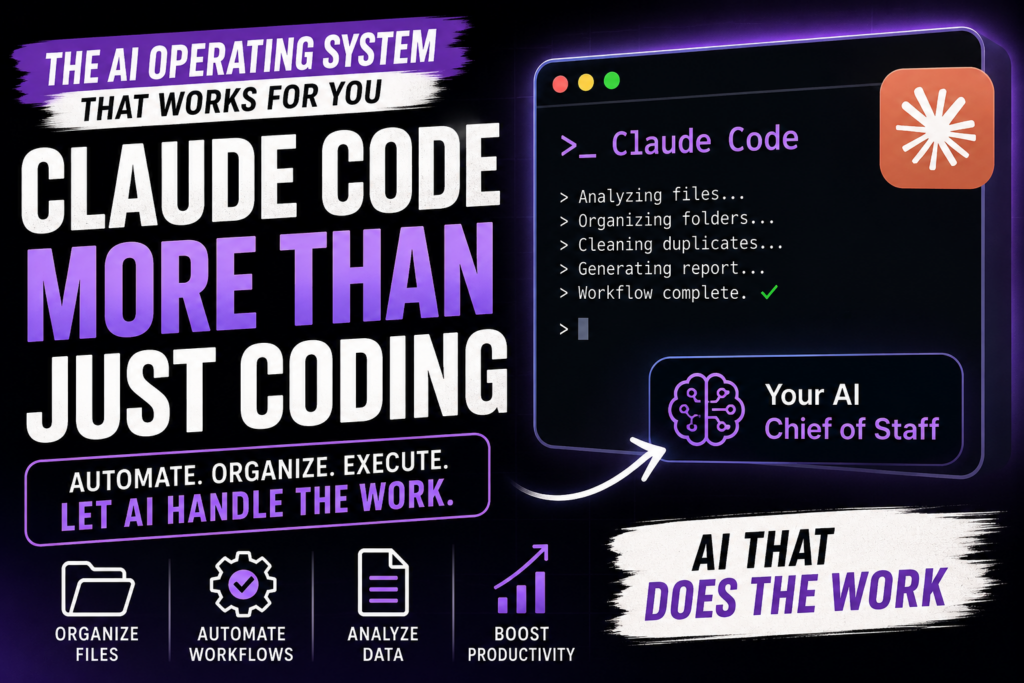
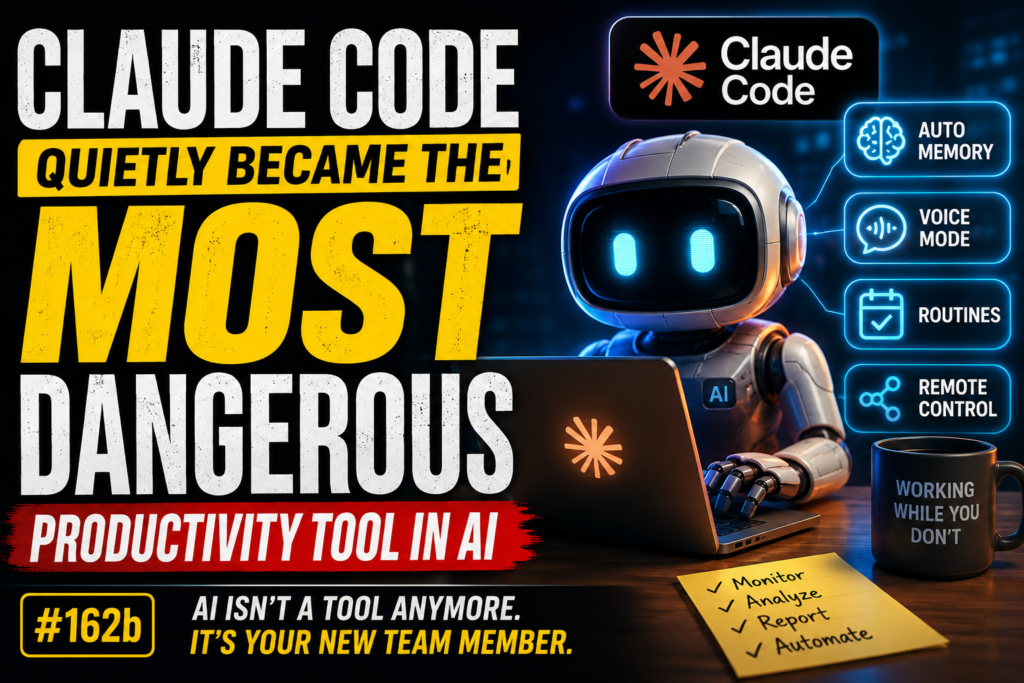
Despite the name, Claude Code is not just a coding assistant for engineers. It is rapidly emerging as an AI operating layer capable of managing workflows, organizing information, automating repetitive tasks, and interacting directly with local systems.
The real breakthrough is not coding assistance.
It is operational execution.
The Problem With Traditional AI Assistants
Most AI tools today still behave like advanced search engines.
You ask a question.
They generate a response.
The interaction usually ends there.
Even the most sophisticated chatbots still depend heavily on humans to:
- move files
- organize systems
- execute workflows
- connect tools
- manage context
- take follow-up actions
This creates a major gap between insight and execution.
Claude Code changes that model entirely.
What Makes Claude Code Different
Unlike browser-based AI tools, Claude Code operates locally on your machine.
That single difference changes everything.
Instead of only generating text, Claude Code can:
- interact with folders
- analyze files
- restructure directories
- automate workflows
- process large datasets
- chain multiple actions together
- maintain long-term operational context
It behaves less like a chatbot and more like:
- an AI operations assistant
- a digital chief of staff
- a workflow automation engine
- a local AI operating system
This is where AI starts becoming infrastructure rather than software.
From “AI Assistant” to “AI Operator”
The biggest mental shift users need to make is this:
Old AI:
“Help me write something.”
New AI:
“Handle this workflow for me.”
That distinction sounds small — but it completely changes how work gets done.
Claude Code represents the beginning of AI systems that:
- execute instead of suggest
- operate instead of respond
- coordinate instead of merely generate
This is the exact direction enterprise AI is moving toward.
Real-World Use Cases Beyond Coding
The most interesting part about Claude Code is that many powerful use cases are coming from non-technical users.
1. Intelligent File Organization
Modern computers become chaotic over time:
- cluttered downloads
- duplicate files
- outdated folders
- scattered screenshots
Claude Code can automatically:
- identify unused files
- reorganize directories
- archive old assets
- improve naming systems
- optimize storage usage
What used to take hours becomes a single workflow command.
2. AI-Powered Research Operations
Researchers and content creators are using Claude Code to:
- summarize long documents
- process transcripts
- extract insights from videos
- organize research repositories
- generate reusable knowledge systems
Instead of manually juggling tabs, folders, PDFs, and notes, users create automated research pipelines.
3. Workflow Automation
This is where the tool becomes transformative.
Claude Code can automate repetitive operational work such as:
- report generation
- document formatting
- file conversions
- spreadsheet processing
- meeting note organization
- data cleanup
These tasks are usually invisible productivity drains inside companies.
AI is now starting to eliminate them.
4. AI as a Personal Operations Layer
Many users describe Claude Code as:
- an AI project manager
- an AI executive assistant
- a workflow coordinator
Because it maintains local context, the system can understand:
- where files are stored
- how projects are structured
- what recurring processes exist
- how workflows connect together
That creates a far more intelligent operational environment than browser chatbots can currently provide.
Why This Matters for Businesses
Most companies still think AI adoption means:
- adding chatbots
- improving content generation
- increasing productivity slightly
But the next competitive advantage will come from something else entirely:
Reducing operational friction.
The companies that win in the AI era will not necessarily have the best models.
They will have:
- the fastest execution
- the best workflow integration
- the most automated operations
- the strongest AI infrastructure
Claude Code points directly toward that future.
The Rise of AI-Native Operating Systems
Historically, software helped humans perform work.
The next generation of AI systems will increasingly perform the work themselves.
This creates a new category:
AI-native operating systems.
These systems will:
- coordinate workflows
- manage information
- execute actions
- maintain organizational memory
- automate multi-step operations
Claude Code is one of the earliest mainstream examples of this shift becoming visible.
And most people are still underestimating its importance because they assume it is “just another coding tool.”
It is not.
The Bigger Industry Shift
We are entering a world where AI systems:
- operate across devices
- collaborate with humans continuously
- make operational decisions
- automate execution layers
- coordinate digital environments autonomously
This changes:
- software development
- enterprise operations
- productivity workflows
- team collaboration
- digital infrastructure itself
The future of AI is not better answers.
The future is autonomous execution.
And tools like Claude Code are giving us an early look at what that future actually feels like.




Responses