
Leadership gaps are becoming visible

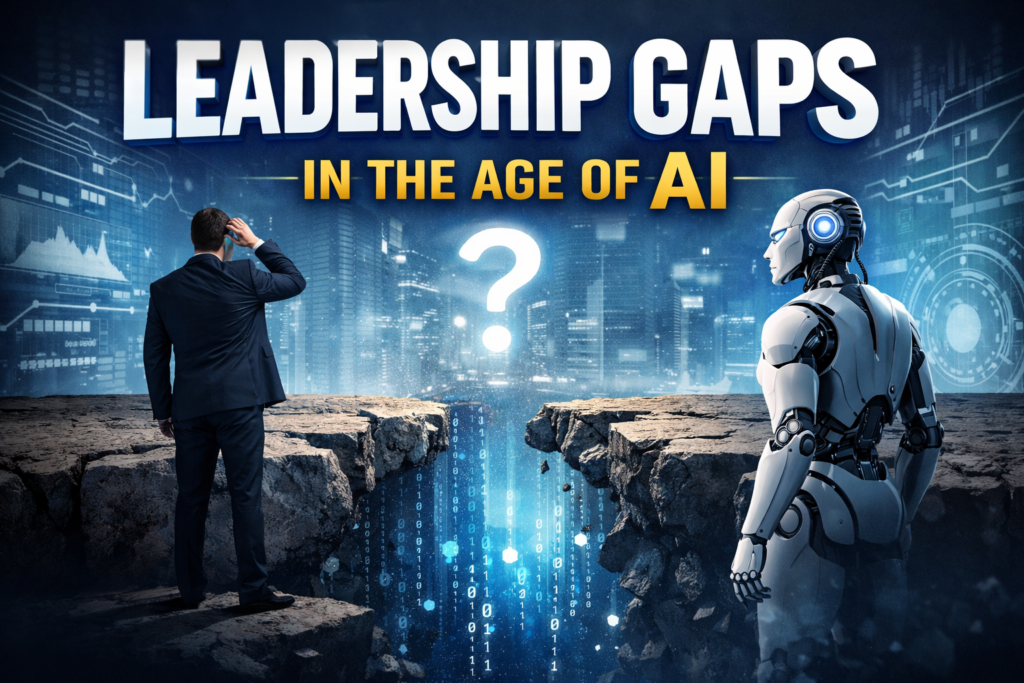
Artificial intelligence is no longer a future ambition — it is actively reshaping how organizations operate, compete, and grow. While many companies are investing heavily in AI tools, platforms, and automation, a deeper shift is underway: leadership capabilities are being tested like never before. As AI accelerates business transformation, leadership gaps that once remained hidden are now becoming highly visible.
AI Is Exposing Strategic Blind Spots
In earlier waves of digital transformation, organizations could afford gradual adoption. Today, AI is moving faster than traditional corporate decision-making cycles. Leaders who treat AI as just another technology upgrade risk missing its strategic implications.
AI is not simply about automation — it influences business models, customer experience, workforce structures, pricing strategies, and competitive differentiation. Leaders who fail to recognize this broader impact often struggle to guide their organizations effectively. The result is fragmented adoption, unclear priorities, and missed opportunities.
From Control to Adaptability
Traditional leadership models often rely on predictability, structured hierarchies, and long-term planning cycles. AI disrupts this stability. Rapid innovation, evolving tools, and data-driven decision-making demand adaptability rather than rigid control.
Leaders now need to become facilitators of experimentation rather than gatekeepers of certainty. Organizations led by adaptive leaders are more likely to foster innovation, encourage cross-functional collaboration, and respond quickly to technological change. Conversely, leaders who resist change can inadvertently slow progress.
Talent and Skill Development Challenges
AI adoption is also highlighting gaps in how leaders approach workforce development. Many employees feel uncertain about how AI will affect their roles. Without clear guidance, reskilling programs, and transparent communication, organizations risk disengagement and resistance.
Strong leadership today involves preparing teams for AI integration — not just technologically, but psychologically. This includes:
- Encouraging continuous learning
- Promoting AI literacy across departments
- Creating safe environments for experimentation
- Aligning AI initiatives with meaningful work outcomes
Leaders who neglect these aspects may find their workforce struggling to keep pace with technological change.
Ethical and Responsible AI Leadership
Another emerging leadership gap involves ethics and governance. AI introduces concerns around bias, privacy, accountability, and transparency. Organizations deploying AI without clear ethical frameworks risk reputational damage, regulatory issues, and loss of stakeholder trust.
Effective leaders must balance innovation with responsibility. This requires understanding not only what AI can do, but what it should do. Ethical leadership in AI is quickly becoming a core business competency.
Decision-Making in the Age of Intelligent Systems
AI-driven insights are transforming decision-making processes. Leaders accustomed to intuition-based decisions must now interpret data-driven recommendations, sometimes generated by complex algorithms.
This shift requires new capabilities:
- Data literacy
- Critical thinking about AI outputs
- Willingness to challenge assumptions
- Collaboration between technical and business teams
Leaders who lack these skills may either over-rely on AI or dismiss it entirely — both risky extremes.
The Opportunity Within the Gap
While leadership gaps can pose risks, they also present opportunities. Organizations that invest in leadership development alongside AI adoption often see stronger transformation outcomes. This includes executive education, cross-disciplinary learning, and exposure to emerging technologies.
Forward-thinking leaders are focusing on:
- AI-informed strategy rather than isolated projects
- Human-AI collaboration models
- Continuous organizational learning
- Transparent communication about change
These practices not only close leadership gaps but also build resilient, future-ready organizations.
Conclusion
AI is acting as a mirror for modern leadership. It reveals strengths, exposes weaknesses, and demands new capabilities. The question is no longer whether leaders should engage with AI, but how effectively they can lead through it.
Those who embrace learning, adaptability, ethical responsibility, and strategic foresight will shape the next generation of organizations. Those who hesitate may find that the technology gap quickly becomes a leadership gap — and ultimately, a competitive one.








Responses