
-

Trending AI Tools – Deep Dive
1. Krisp Accent Converter for YouTube
Category: AI Audio / Communication Enhancement
What it does
Krisp’s Accent Converter uses AI to modify or neutralize spoken accents in real-time, especially for video/audio content like YouTube. It ensures speech is clear, standardized, and globally understandable without changing the speaker’s voice identity.
Why it matters
- Global teams struggle with accent comprehension
- Content creators want wider reach
- Improves accessibility without re-recording audio
Key Features
- Real-time accent conversion
- Maintains original voice tone
- Works for meetings, recordings, and videos
- Likely integrates with streaming/recording tools
Use Cases
- YouTubers targeting global audiences
- Customer support teams
- Remote teams across regions
Explore: https://krisp.ai
2. Claude Code Desktop App (Redesigned)
Category: AI Development / Coding Assistant
What it does
Claude Code Desktop transforms your local environment into an AI-powered coding workspace, where multiple AI agents can run tasks in parallel—editing code, debugging, and executing workflows.
Why it matters
- Moves from “assistant” → “autonomous coding teammate”
- Enables parallel execution of coding tasks
- Reduces development cycle time significantly
Key Features
- Multi-agent workflows (parallel coding tasks)
- IDE + terminal integration
- Can read, edit, and execute code
- Supports long-running development processes
Use Cases
- Engineering teams
- Startup MVP development
- DevOps automation
Explore: https://www.anthropic.com
Insight: Tools like this are part of a broader trend where AI becomes deeply embedded in developer workflows rather than just chat-based assistance
3. Cleo Labs
Category: Compliance Automation / E-commerce
What it does
Cleo Labs automates global compliance for selling physical products, including taxes, regulations, documentation, and cross-border requirements.
Why it matters
Selling globally is complex due to:
- Tax laws (VAT, GST, etc.)
- Import/export regulations
- Compliance documentation
Cleo simplifies all of this into automated workflows.
Key Features
- Automated compliance checks
- Global tax handling
- Regulatory tracking
- Integration with e-commerce systems
Use Cases
- D2C brands expanding globally
- Shopify / Amazon sellers
- Logistics & supply chain teams
Explore: https://www.cleo.com
4. Resend CLI 2.0
Category: Developer Tool / Email Infrastructure
What it does
Resend CLI is a developer-first tool to send, test, and automate emails, optimized for:
- Humans (easy usage)
- AI agents (automation-ready)
- CI/CD pipelines
Why it matters
Email infrastructure is often messy. This tool makes it:
- Programmable
- Testable
- AI-integrated
Key Features
- Command-line email sending
- API-first design
- CI/CD integration
- Works with automated workflows
Use Cases
- SaaS products
- Transactional emails
- AI agents sending notifications
Explore: https://resend.com
5. Caveman
Category: AI Optimization / Token Efficiency
What it does
Caveman focuses on reducing token usage in AI systems—helping you achieve the same output with fewer tokens (and lower cost).
Why it matters
- AI costs scale with token usage
- Large prompts = expensive + slower
- Caveman optimizes prompts and workflows
Key Features
- Prompt compression
- Token optimization
- Cost reduction
- Faster inference
Use Cases
- AI startups managing API costs
- Developers using GPT/Claude APIs
- High-scale automation systems
Explore: https://caveman.ai
6. Recall 2.0
Category: Knowledge Management / Personal AI
What it does
Recall 2.0 builds a personal knowledge AI that remembers everything you read, watch, or learn—and connects it intelligently.
Why it matters
Information overload is a real problem. Recall turns scattered data into:
- Structured knowledge
- Contextual insights
- Long-term memory
Key Features
- Saves content from web, videos, docs
- Creates knowledge graphs
- AI-powered recall and connections
- Personalized learning system
Use Cases
- Researchers
- Students
- Founders & strategy teams
- Lifelong learners
Explore: https://www.getrecall.ai
As highlighted in the newsletter, Recall helps “curate an AI that knows what you know”
7. Gemini Robotics ER 1.6
Category: Robotics AI / Vision + Spatial Reasoning
What it does
This is Google’s advanced robotics AI model designed for:
- Visual understanding
- Spatial reasoning
- Real-world task execution
It enables robots to interpret environments and act intelligently.
Why it matters
This is a major step toward:
- Autonomous robots
- AI-powered physical systems
- Real-world AI deployment
Key Features
- Multimodal perception (vision + reasoning)
- Spatial awareness
- Task execution in physical environments
- Robotics integration
Use Cases
- Industrial automation
- Warehousing
- Robotics research
- Smart manufacturing
Explore: https://deepmind.google
It represents state-of-the-art (SOTA) robotics intelligence combining perception and reasoning
Final Insight
These tools collectively show a bigger trend:
- AI is moving from chat → execution → infrastructure
-
Focus is shifting to:
- Automation
- Cost efficiency
- Workflow integration
- Real-world deployment
In simple terms:
We’re no longer just using AI — we’re building systems powered by AI.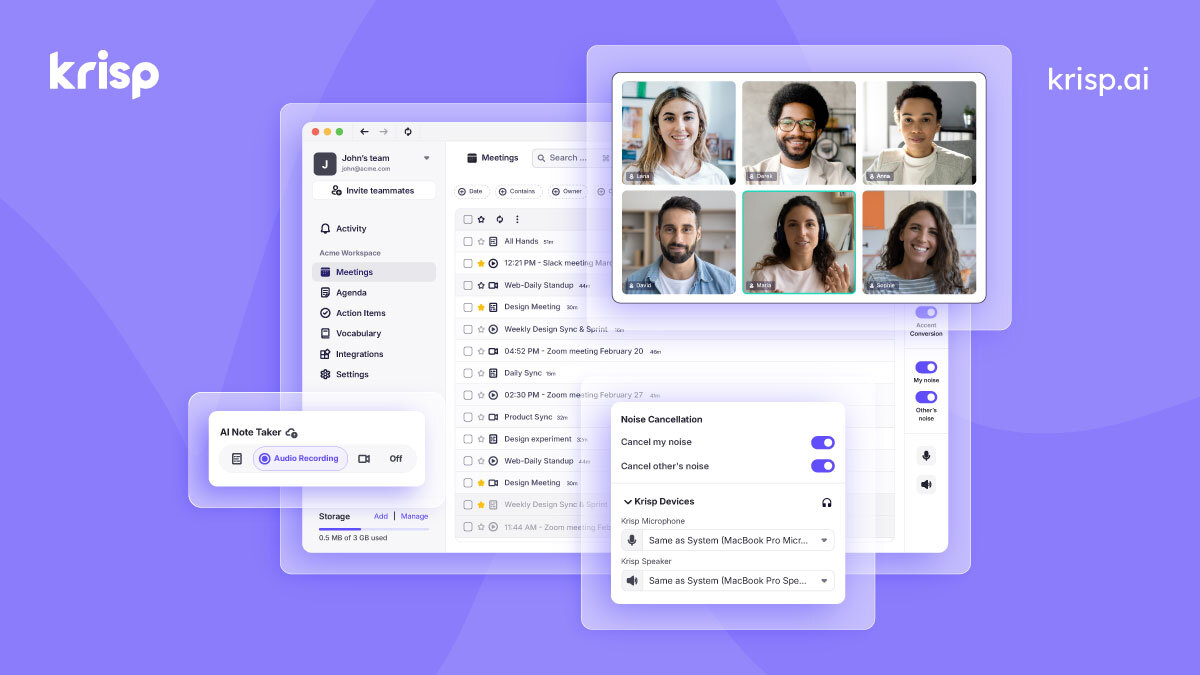
krisp.ai
Krisp cancels background noise, records, transcribes, and summarizes meetings and calls.