
-

Digital Storm Newsletter
Summary: Anthropic’s Real Advantage Has Nothing to Do With Models (#165b)
Joerg Storm’s core argument is that the next phase of the AI race is no longer about who has the best model—it’s about who owns the infrastructure that enterprises use to deploy AI at scale.
Key Takeaways
1. Anthropic’s Advantage Is Enterprise Infrastructure, Not Claude
The newsletter argues that Anthropic’s enormous valuation (reportedly heading toward $900B+) is not primarily driven by Claude’s model performance.
Instead, investors are valuing:
-
Managed AI deployment systems
-
Enterprise governance and security layers
-
Agent orchestration infrastructure
-
Compliance and auditability features
-
Enterprise integration capabilities
The thesis: models are becoming commodities, while deployment infrastructure becomes the defensible moat.
Implication: Companies should focus less on benchmark scores and more on which ecosystem can securely deploy AI across thousands of employees.
2. Google’s Most Important Announcement Was Antigravity 2.0
While much of the attention went to Gemini 3.5, Storm believes the real strategic move was Google’s launch of Antigravity 2.0.
Antigravity allows enterprises to:
-
Build AI agents
-
Manage workflows
-
Orchestrate multiple models
-
Deploy AI systems without creating custom infrastructure
This positions Google directly against Anthropic’s Managed Agents strategy.
The battle is shifting from:
Model vs Model
to
Infrastructure Platform vs Infrastructure Platform
3. The KPMG Deal Signals Enterprise AI Has Crossed a Major Threshold
The newsletter highlights KPMG’s rollout to:
-
276,000 users
-
Across 138 countries
This matters because AI is no longer being used merely for employee productivity.
It is becoming embedded in:
-
Client delivery
-
Consulting engagements
-
Audit workflows
-
Advisory services
The implication is that clients will soon expect AI-enhanced services as standard.
Companies working with consulting firms should prepare for:
-
Faster turnaround expectations
-
AI-assisted analysis
-
AI-generated deliverables
-
AI-native service experiences
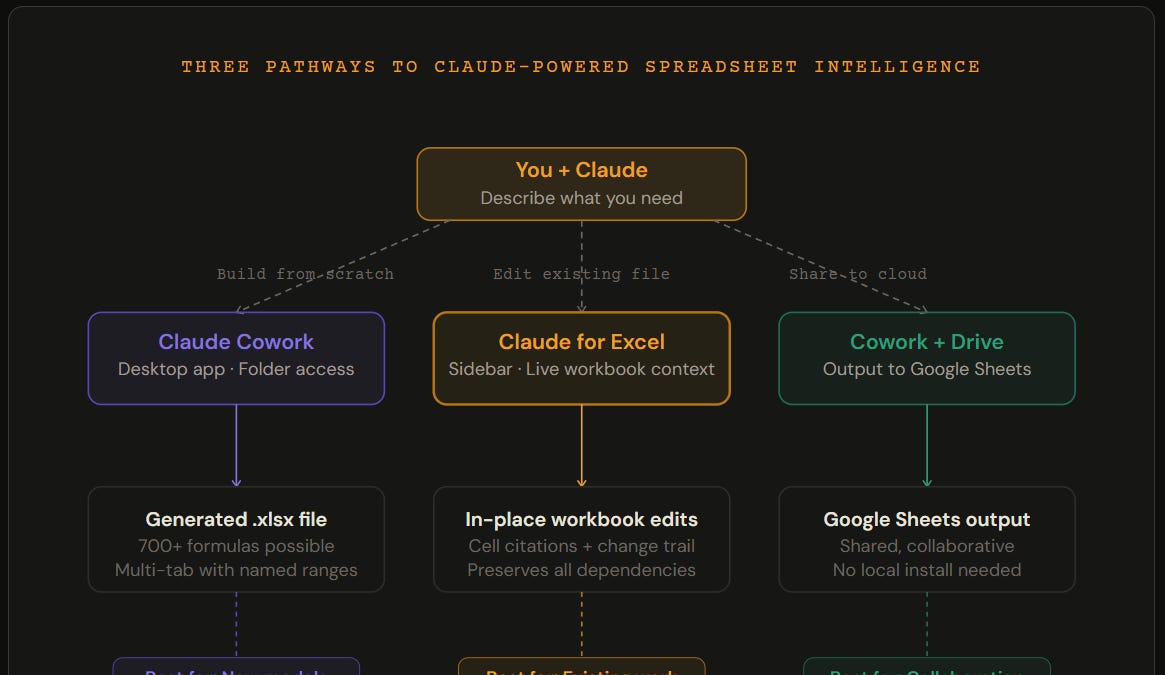
4. Claude for Excel Is Wildly Underutilized
Storm identifies Claude for Excel as one of the most overlooked enterprise AI tools.
Most professionals currently use it for:
-
Formula creation
-
Spreadsheet troubleshooting
But its real value lies in:
-
Understanding entire workbooks
-
Financial modeling
-
Investment analysis
-
Scenario planning
-
Data interpretation
According to the newsletter, its integration with professional financial datasets such as:
-
FactSet
-
PitchBook
-
S&P Global
-
LSEG
turns it into a sophisticated reasoning layer rather than just a spreadsheet assistant.
5. Microsoft Build and Apple WWDC Could Lock In Ecosystems
Storm sees two near-term events as highly significant:
-
Microsoft Build 2026
-
Apple WWDC 2026
Expected developments:
Microsoft
-
Copilot multimodel orchestration
-
Better coordination across multiple AI systems
-
Deeper enterprise integration
Apple
-
Siri routing requests to different AI providers
-
Potential support for Claude and Gemini
-
New AI framework within iOS 27
The concern for enterprises is platform lock-in.
Decisions that are currently reversible may become much harder to change once workflows, agents, and data pipelines are deeply embedded into a specific ecosystem.
What Smart Operators Should Do
If You’re an Enterprise Leader
-
Evaluate AI platforms based on deployment capabilities, not benchmark rankings.
-
Review long-term pricing agreements before vendors raise rates.
-
Develop an AI governance framework before large-scale rollout.
If You’re in Consulting or Professional Services
-
Assume clients will soon expect AI-enhanced deliverables.
-
Build AI-native workflows now rather than later.
-
Train teams on agent-based work rather than chatbot usage.
If You’re in Finance
-
Explore workbook-level AI tools instead of basic spreadsheet copilots.
-
Focus on financial reasoning workflows where AI creates the most leverage.
If You’re in Technology Leadership
-
Watch Microsoft’s and Apple’s ecosystem strategies closely.
-
Avoid becoming overly dependent on a single AI vendor before standards mature.
Bottom Line
The newsletter’s central thesis is:
The winners of the AI market may not be the companies with the smartest models. They may be the companies that own the infrastructure layer through which enterprises deploy, manage, govern, and scale AI.
In this view, Anthropic’s real moat isn’t Claude itself—it’s the enterprise operating system being built around Claude. Google, Microsoft, and Apple are now racing to build competing ecosystems, and the next 12–24 months may determine which platforms become the default AI infrastructure for large organizations.
drstorm.substack.com
Anthropic’s Real Advantage Has Nothing to Do With Models #165b
We are honored to count you among the >600.000 readers of "DIGITAL STORM weekly". Please help grow our community by inviting your friends.
-